Keyword research
AI Keyword Research: How to Find Keywords With AI
By the SEO Using AI Editorial Team · Last updated · 3 min read
Quick answer
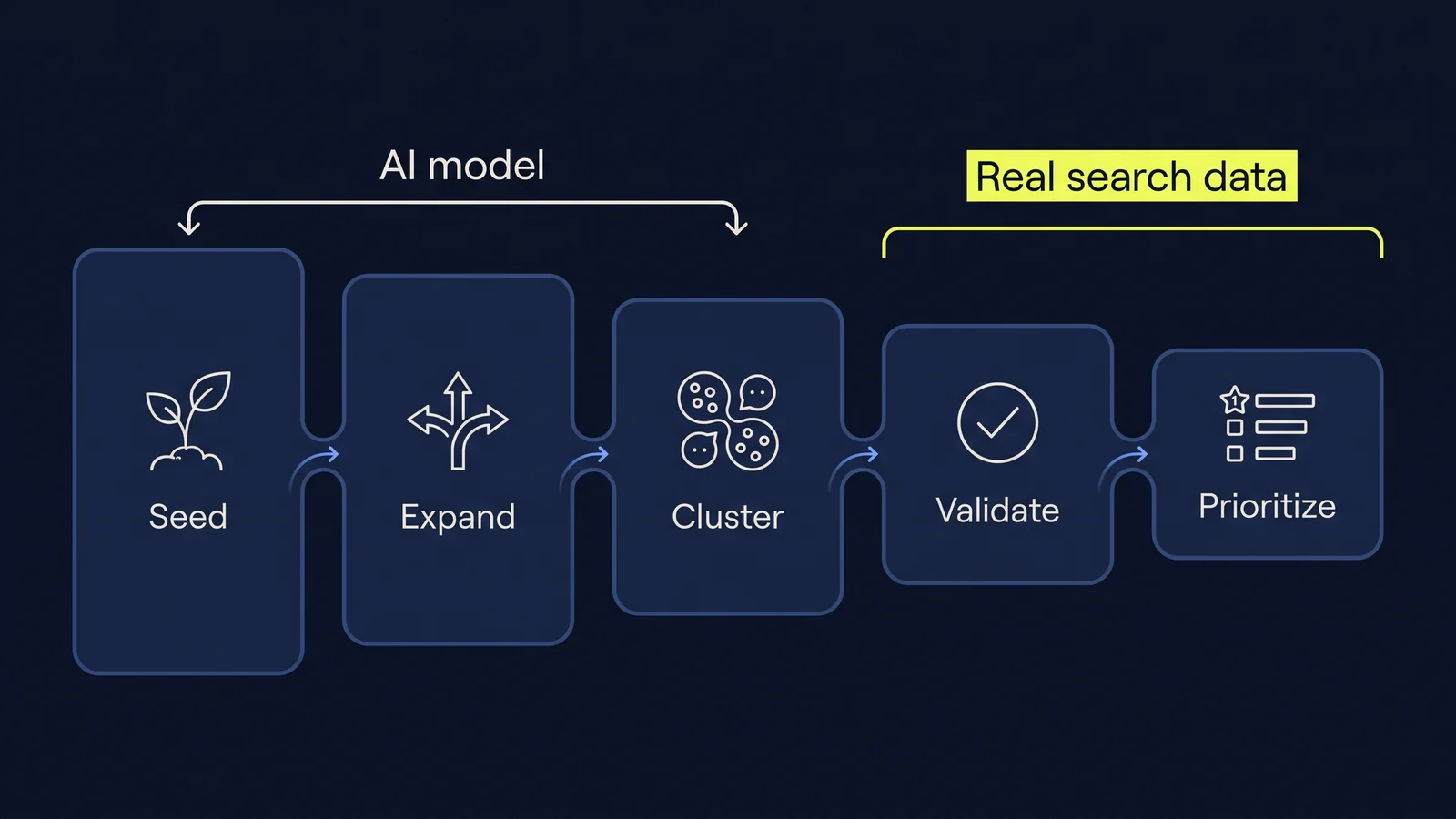
AI keyword research is the process of using an AI model to generate, group, and prioritize search queries, then confirming them with real search data. The model is excellent at expanding seed topics into questions and clustering them by intent. It is unreliable for search volume and difficulty, so those numbers must come from Google Search Console, Keyword Planner, or a paid SEO platform.
What is AI keyword research?
AI keyword research is the use of AI models to speed up finding and organizing the search queries a site should target. The model generates ideas and structure. Real data tools confirm demand.
The division of labor matters. A general AI model has read a huge amount of text about your topic, so it knows how people phrase questions. It has not seen Google's query logs, so it does not know how many people ask them.
How do you find keywords with AI, step by step?
You find keywords with AI in five steps: seed, expand, cluster, validate, and prioritize.
- Seed. Tell the model what you sell, who buys it, and where they are. Add five to ten seed topics in your own words.
- Expand. Ask for question-style queries across the buying journey: problem, comparison, purchase, and use. Ask for the phrasing a real person would type or say.
- Cluster. Ask the model to group the list by search intent and to flag groups that one page could answer.
- Validate. Check each cluster's main query in a real data source. Drop clusters with no demand.
- Prioritize. Rank clusters by business value first, then by how realistic it is to compete, then by volume.
What prompt works for keyword expansion?
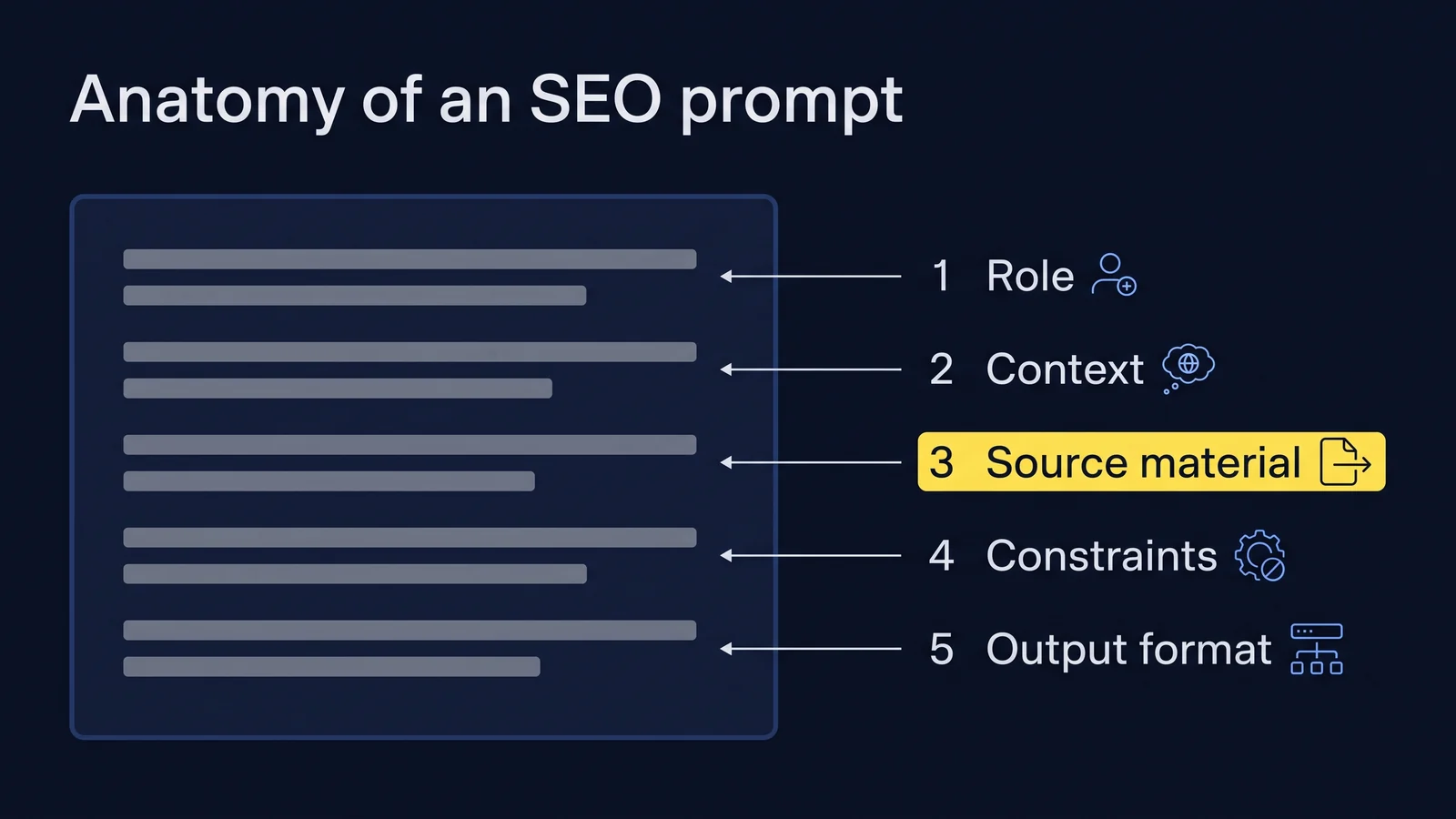
A prompt works for keyword expansion when it gives the model a role, your context, and a strict output format. This structure is reliable:
You are an SEO strategist. My site sells [product] to [audience] in the United States.
Seed topics: [list].
List 40 search queries a real buyer would type, as questions where natural.
Group them by intent: informational, commercial, transactional.
For each group, name the single page that should answer it.
Do not invent search volumes. Output a table.
The line about volumes is important. Without it, many models will add numbers that look real and are not. You can generate prompts like this with the AI SEO Prompt Builder.
How do you validate AI keyword ideas with real data?
You validate AI keyword ideas by checking them against a source that measures actual searches. Three sources cover most needs.
| Source | Cost | What it tells you |
|---|---|---|
| Google Search Console | Free | Queries your site already appears for, with clicks and position |
| Google Keyword Planner | Free with an Ads account | Volume ranges and related terms |
| Semrush, Ahrefs, and similar | Paid | Volume, difficulty, and who ranks now |
Search Console is the most underrated of the three. Export your queries, paste them into the model, and ask which ones rank between positions 5 and 20. Those are pages you can improve this week, which is faster than any new article.
How does AI help with search intent?
AI helps with search intent by reading the current results the way a user would. Paste the titles and descriptions of the top ten results for a query and ask the model what the searcher wants and which format dominates.
If the results are all comparison lists, a how-to guide will struggle no matter how good it is. Matching the format that already satisfies searchers is one of the highest-leverage decisions in SEO, and it takes a model seconds to assess.
Which keywords can a new site realistically win?
A new site can realistically win long, specific queries with clear intent. Head terms are held by sites with years of links and brand searches.
Ask the model to rewrite each broad topic into narrower versions: by audience, by platform, by problem, or by comparison. "AI SEO" is a head term. "How to use AI for SEO on a WordPress site" is winnable. Build a cluster of these around one pillar page, link them together, and the broader terms follow later.
What should you do after keyword research?
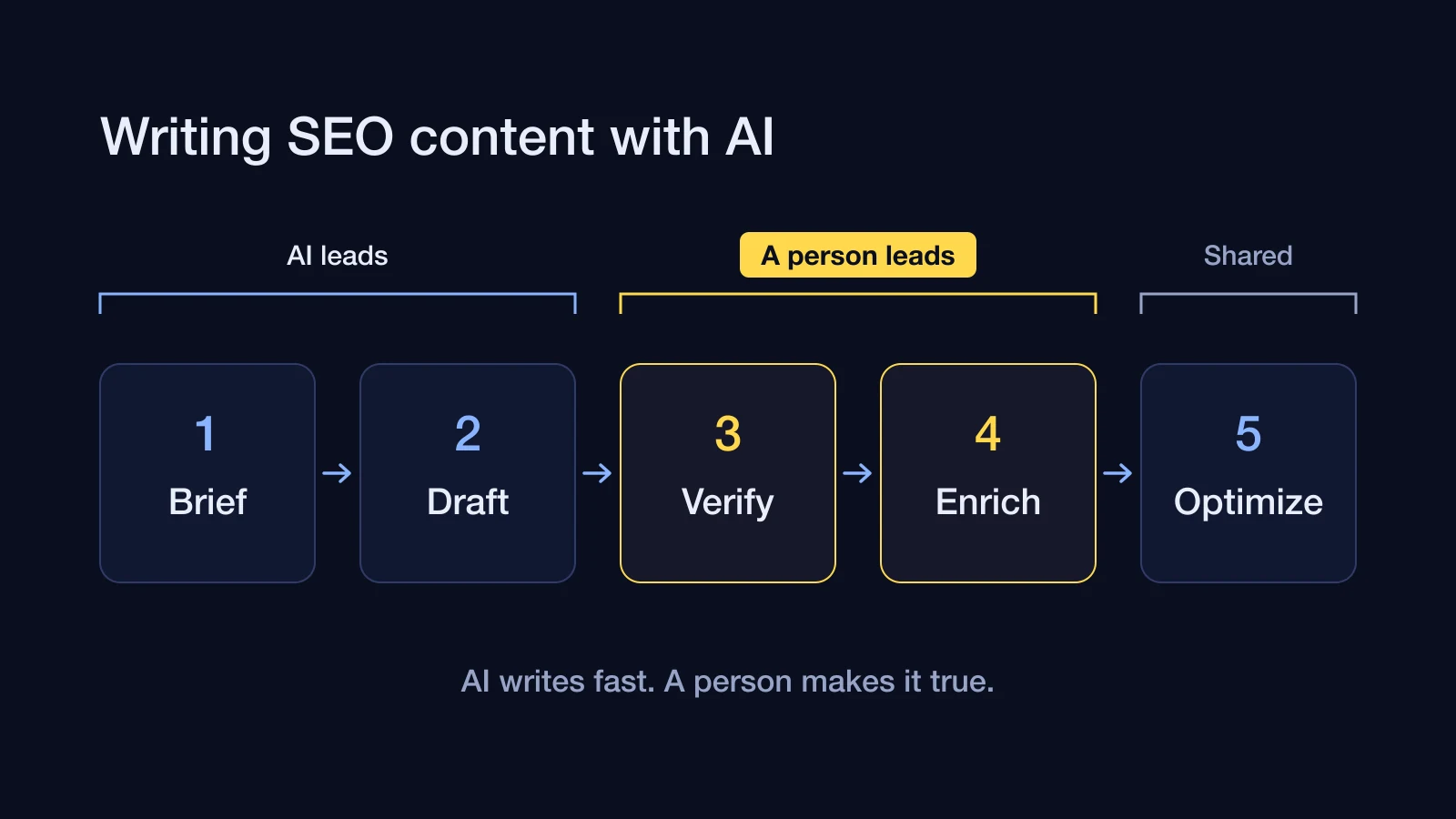
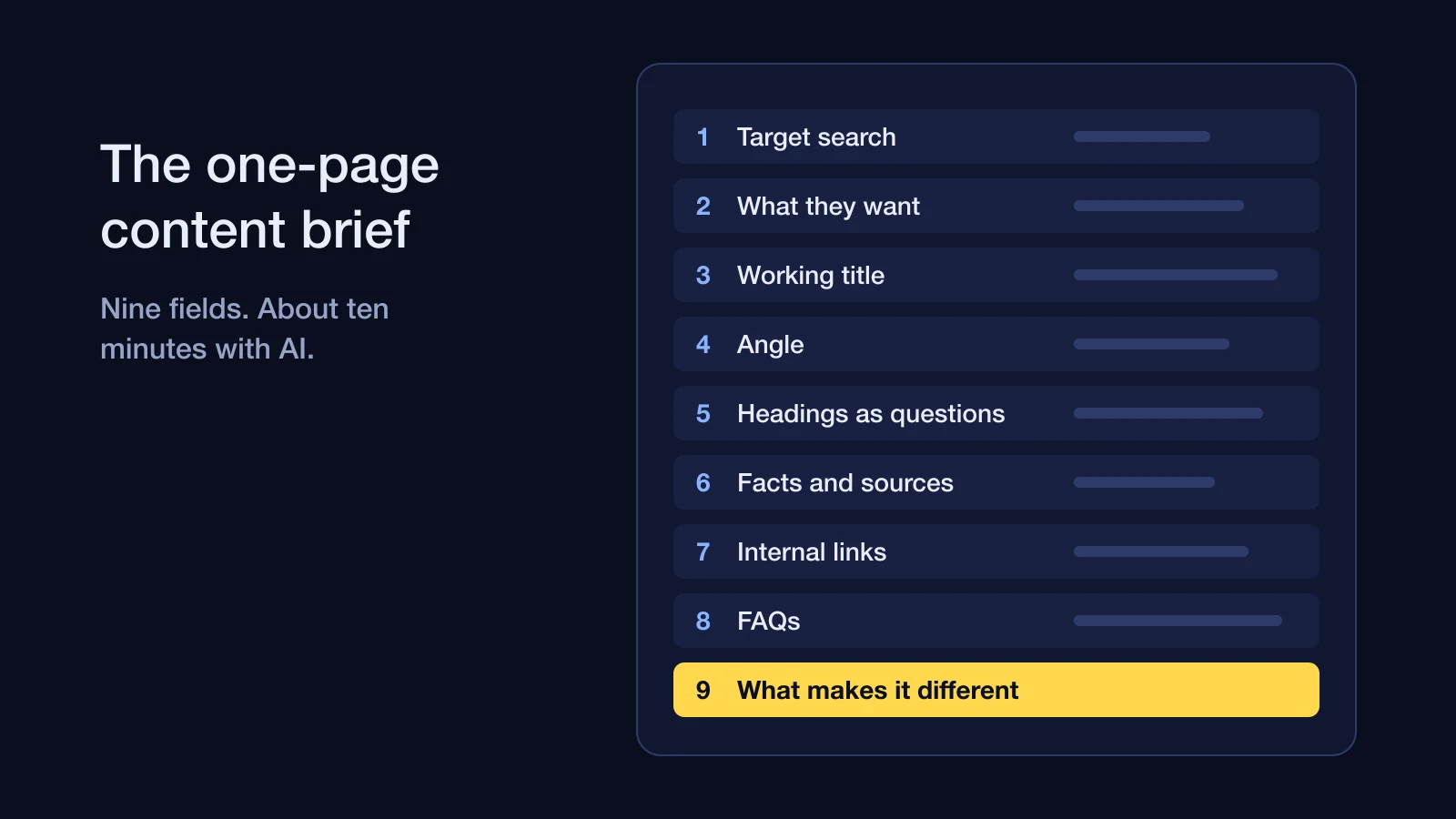
After keyword research, turn each validated cluster into a content brief. The brief names the primary query, the intent, the questions the page must answer, and what your page will add that others lack.
The full workflow from brief to measurement is in how to use AI for SEO. For ready-made prompt structures, see prompts for SEO.
Frequently asked questions
Can ChatGPT do keyword research?
ChatGPT can do the idea and organization half of keyword research: expanding seed topics, finding question variants, and grouping keywords by intent. It cannot supply accurate search volumes or difficulty scores, so pair it with Google Search Console, Keyword Planner, or a paid SEO platform.
Are AI-generated search volumes accurate?
AI-generated search volumes are not accurate. General AI models do not have access to a live keyword database, so any volume they state is an estimate at best. Always confirm numbers in a real data source.
How many keywords should one page target?
One page should target one search intent, which usually means one primary keyword plus its close variants and related questions. Creating a separate page for every variation splits your authority and causes pages to compete with each other.