Tool comparison
Best AI SEO Tools: What Each One Is Actually For
By the SEO Using AI Editorial Team · Last updated · 4 min read
Quick answer
The best AI SEO tools fall into four groups. General AI models such as ChatGPT, Claude, and Gemini handle research, briefs, drafting, and code. SEO data platforms such as Semrush and Ahrefs supply real keyword and ranking data. Content optimizers such as Surfer and Clearscope score drafts against ranking pages. AI visibility trackers measure how often AI answers mention your brand. Most sites need one model and one data platform, not all four.
What is an AI SEO tool?
An AI SEO tool is any software that uses AI to help with search engine optimization. The label covers very different products, from general chat models to platforms with their own keyword databases, so the first step is knowing which type you are looking at.
Buying the wrong type is the most common mistake. A chat model cannot give you trustworthy search volumes. A keyword platform cannot write a useful brief about your business. Match the tool to the job.
What are the main types of AI SEO tools?
The main types of AI SEO tools are general AI models, SEO data platforms, content optimizers, and AI visibility trackers.
| Type | Examples | Best for | Main limit |
|---|---|---|---|
| General AI models | ChatGPT, Claude, Gemini | Research, briefs, drafting, schema, regex, analysis of exports | No real search volume or ranking data |
| SEO data platforms | Semrush, Ahrefs | Keyword volumes, difficulty, backlinks, rank tracking, site audits | Cost, and a learning curve |
| Content optimizers | Surfer, Clearscope | Scoring a draft against pages that already rank | Can push writers toward sameness |
| AI visibility trackers | Tools built into major SEO suites, plus newer specialists | Measuring brand mentions in AI answers | A young category with changing methods |
| Answer engines as research | Perplexity, ChatGPT search | Seeing which sources AI engines cite for a query | Results vary between runs |
Pricing changes often, so check each vendor's pricing page before you decide. We do not list prices here because a stale price is worse than none.
Which AI model is best for SEO work?
The best AI model for SEO work is the one you will use with good inputs. ChatGPT, Claude, and Gemini can all cluster keywords, draft briefs, write schema, and explain technical errors.
The differences that matter in practice are small and change with every release. What matters more is how you prompt. A model given your audience, your competitors' headings, and a clear output format will beat a better model given a one-line request. Our prompts for SEO guide shows the structure, and the AI SEO Prompt Builder assembles it for you.
When do you need an SEO data platform?
You need an SEO data platform when decisions depend on numbers a chat model cannot know. That includes search volume, keyword difficulty, who links to a competitor, and where you rank today.
Before paying, use what is free. Google Search Console shows the real queries your site already appears for, which is the most reliable keyword data you will ever get. Google Keyword Planner gives volume ranges. Many paid platforms also have limited free tiers that are enough for a small site.
Are AI content optimizers worth it?
AI content optimizers are worth it for teams that publish often and need a consistent quality check. They compare your draft with pages that rank and suggest missing topics and terms.
Use them as a checklist and not as a target. A perfect score means your page resembles what already ranks. It does not mean your page is better. The pages that earn links and AI citations usually contain something the others lack, such as original data or direct experience.
How do you track visibility in AI answers?
You track visibility in AI answers by testing a fixed list of prompts on a schedule and recording whether your brand is mentioned or linked. Dedicated trackers automate this, and the large SEO suites have added similar reports.
You can start by hand. Write 20 prompts your customers would ask, run them monthly in ChatGPT, Perplexity, Gemini, and Claude, and log mentions in a spreadsheet. Our generative engine optimization guide explains what to change when you are missing.
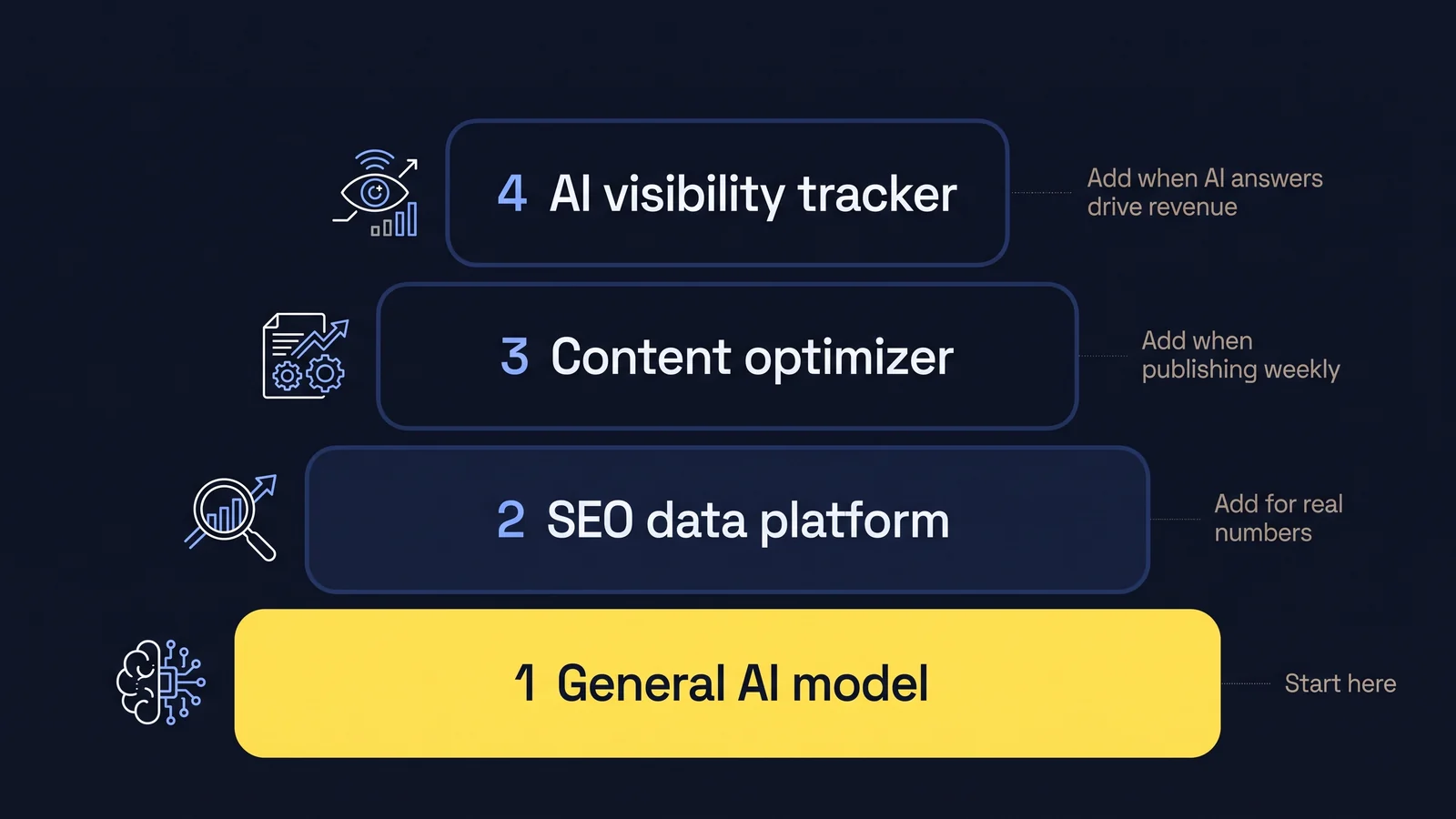
How should you choose your AI SEO stack?
Choose your AI SEO stack by starting small and adding a tool only when a specific job demands it.
- Start free. One general AI model plus Google Search Console.
- Add data. When you need volumes and competitor research, add one SEO data platform.
- Add optimization. When you publish weekly and want consistency, consider a content optimizer.
- Add tracking. When AI answers matter to your revenue, track prompts by hand first, then automate.
For the full workflow these tools plug into, read how to use AI for SEO.
Frequently asked questions
What is the best free AI SEO tool?
The best free AI SEO setup is a free tier of a general AI model such as ChatGPT, Claude, or Gemini combined with Google Search Console. The model handles research, briefs, and drafts. Search Console provides real query, click, and position data that the model cannot invent.
Do I need a paid AI SEO tool?
You do not need a paid AI SEO tool to start. Paid platforms become worth it when you need reliable keyword volumes, competitor data, rank tracking, or site audits at a scale you cannot do by hand.
Can ChatGPT replace Semrush or Ahrefs?
ChatGPT cannot replace Semrush or Ahrefs because it has no database of search volumes, backlinks, or rankings. It can analyze exports from those tools very well, which is why the two work best together.