GEO
Generative Engine Optimization: How to Get Cited by AI
By the SEO Using AI Editorial Team · Last updated · 4 min read
Quick answer
Generative engine optimization (GEO) is the practice of structuring content so AI answer engines such as ChatGPT, Perplexity, Gemini, Claude, and Google AI Overviews can retrieve it, quote it, and cite it. GEO builds on SEO. AI engines pull passages from pages that already rank, then favor passages that answer directly, stand alone, and include sourced facts.
What is generative engine optimization?
Generative engine optimization (GEO) is the practice of making your content easy for AI answer engines to find, quote, and cite. The engines include ChatGPT, Perplexity, Gemini, Claude, Microsoft Copilot, and Google AI Overviews.
GEO exists because a growing share of questions are answered on the results page or inside a chat. SparkToro's 2026 analysis reports that less than one third of Google searches still send a click. When fewer people click, being named in the answer becomes its own form of visibility.
How do AI answer engines choose what to cite?
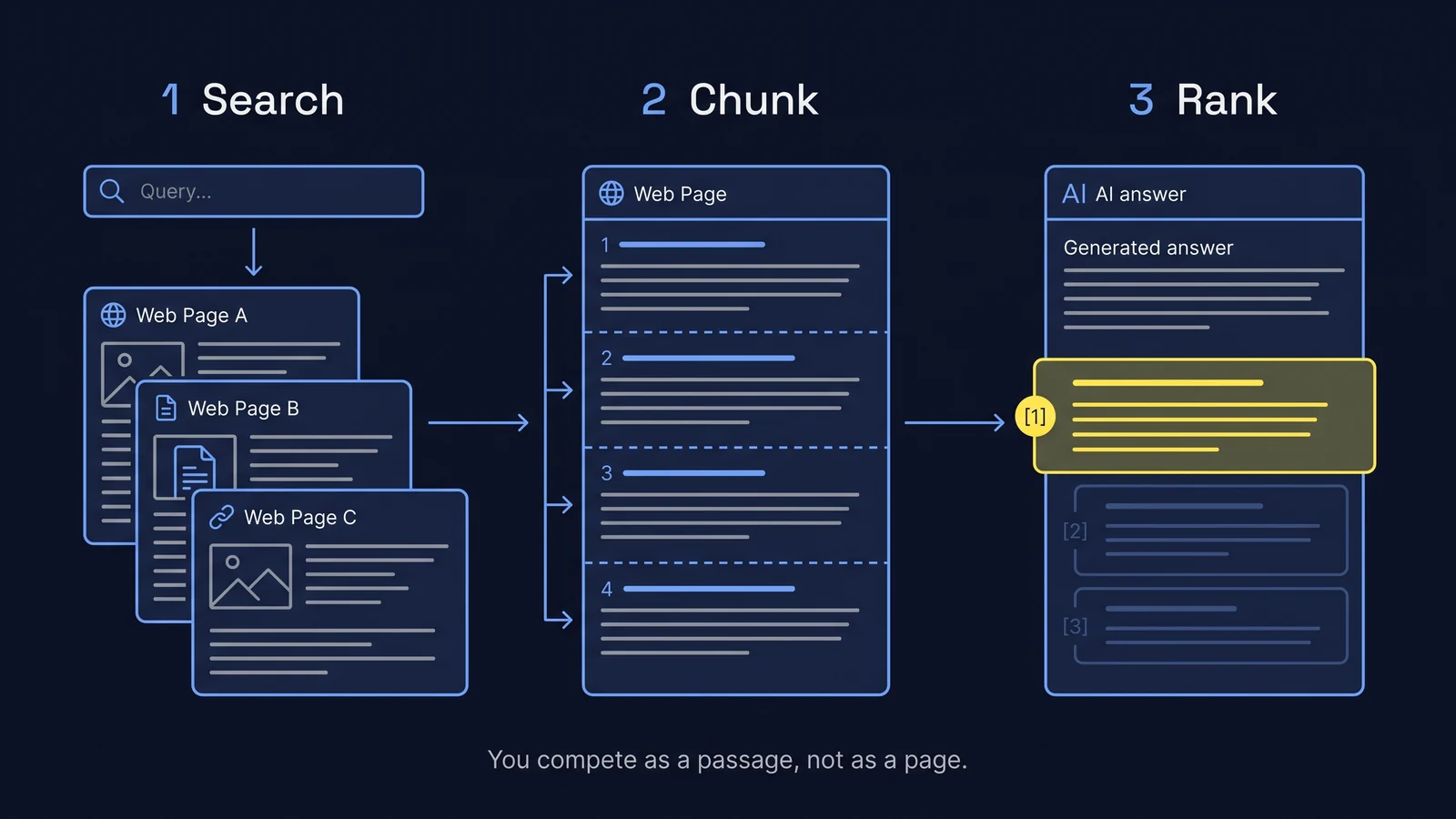
AI answer engines choose what to cite in three stages: search, chunk, and rank.
- Search. The engine turns the user's question into search queries and fetches top results.
- Chunk. Each page is split into passages of a few hundred words, often at headings.
- Rank. Passages are scored against the question. The best ones are quoted and their sources cited.
Two consequences follow. First, you compete as a passage and not as a page, so one clear section can beat a longer, vaguer article. Second, classic SEO still gates entry. A page that does not rank rarely gets fetched at all.
How do you write content that AI engines quote?
You write content that AI engines quote by making every section a complete, sourced answer. Five habits cover most of it.
- Answer first. The first sentence under a heading should answer the question the heading asks.
- Use question headings. Phrase headings the way people ask, such as "How much does X cost?"
- Keep passages self-contained. Name the subject in each section so it makes sense when extracted alone.
- Add sourced facts. A number with a named source is far more quotable than a general claim.
- Show dates. Display a last updated date and keep the content current.
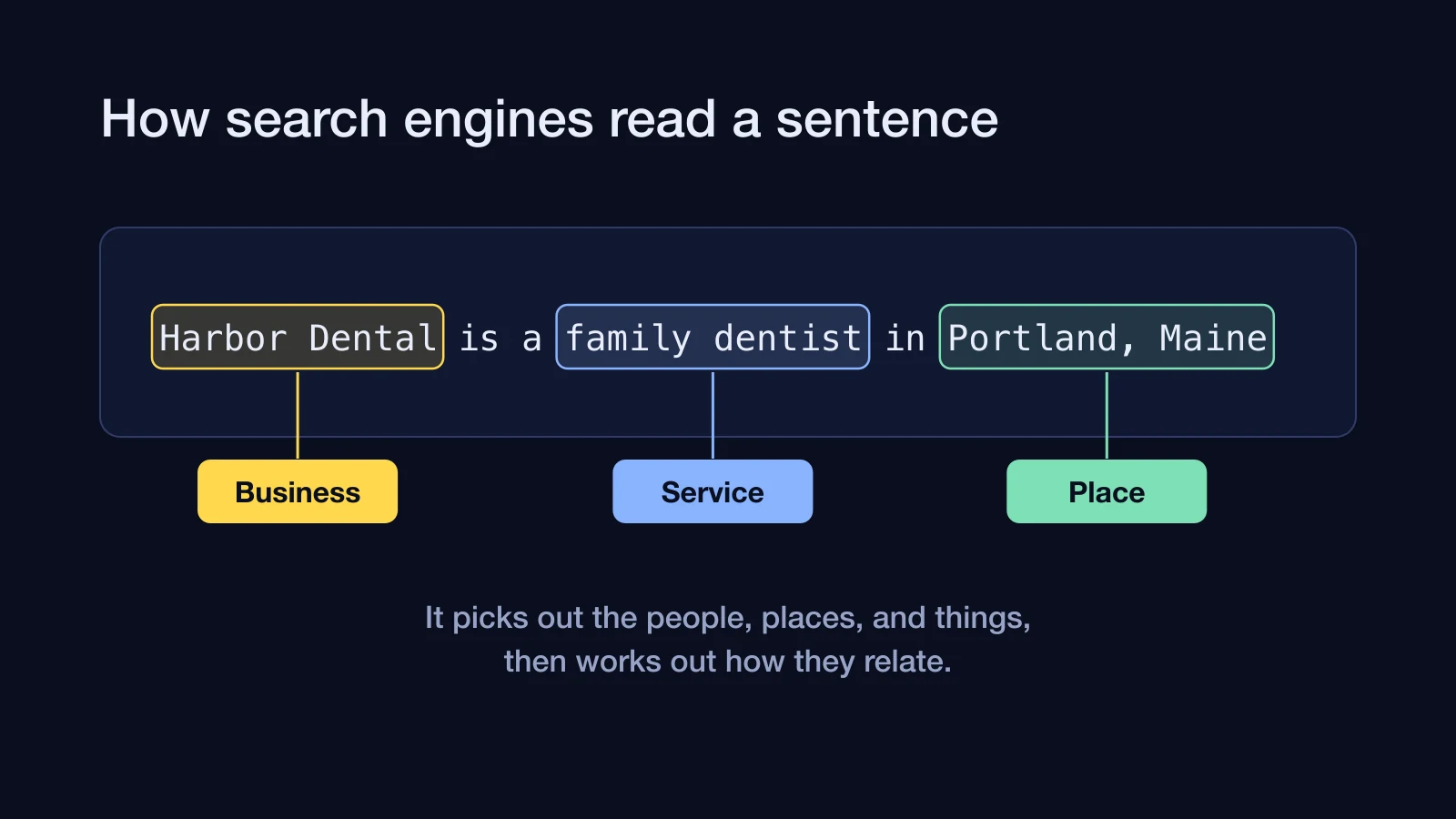
This page follows those rules. Each section opens with a direct answer and repeats its subject on purpose. The reason this works is explained in NLP and SEO, which covers how search engines read meaning.
Does classic SEO still matter for AI search?
Classic SEO still matters for AI search because AI engines retrieve from search indexes. Google's AI Overviews draw heavily on pages that already rank for the query, and ChatGPT and Copilot rely on web search results.
The click math also rewards being cited. Pew Research Center found users clicked a result in 8% of visits with an AI summary, against 15% without one. Fewer clicks are available, so the pages named in the summary take a larger share of what remains.
What technical setup helps AI crawlers?
The technical setup that helps AI crawlers is fast, server-rendered HTML with clean structure. Use this checklist.
| Item | Why it matters |
|---|---|
| Server-side rendering | Some AI crawlers run little or no JavaScript |
| One H1 and logical H2 and H3 headings | Chunkers often split content at headings |
| Real tables and lists | Structured comparisons are easy to extract |
| JSON-LD schema | Organization, Article, FAQPage, and BreadcrumbList clarify what the page is |
| robots.txt that allows AI bots | Blocked crawlers cannot cite you |
| llms.txt | A short map of your key pages for AI systems |
You can create the last item in a minute with the llms.txt Generator. Be clear about what it does. Google's documentation on AI features says there are no additional requirements to appear in AI Overviews or AI Mode, and that you do not need new AI text files or special markup. So llms.txt is an optional extra for other AI systems, not a Google ranking factor. The items that matter most in this table are the first four.
How do you get your brand mentioned in AI answers?
You get your brand mentioned in AI answers by being described consistently across sources the models trust. AI answers draw on both live retrieval and training data, and both lean on third-party sites.
Keep your brand name and description identical everywhere. Earn real mentions in industry publications, communities, and review sites. Publish original data others want to reference. Do not fake reviews or forum posts. It violates platform rules and the damage outlasts the benefit.
How do you measure GEO results?
You measure GEO results by tracking mentions, citations, and referral traffic from AI engines over time.
- Write 20 to 50 prompts your customers would ask.
- Run them monthly in ChatGPT, Perplexity, Gemini, and Claude.
- Log whether your brand is mentioned, whether your site is linked, and where you appear.
- In your analytics, watch referrals from chatgpt.com, perplexity.ai, gemini.google.com, and copilot.microsoft.com.
For the wider workflow GEO fits into, read how to use AI for SEO. To compare tracking tools, see AI SEO tools.
Frequently asked questions
What is the difference between SEO and GEO?
SEO aims to rank pages in search results. GEO aims to get passages from those pages quoted and cited inside AI-generated answers. GEO depends on SEO because AI engines usually retrieve from pages that already rank well.
Is GEO the same as AEO?
GEO and AEO overlap almost completely. Answer engine optimization (AEO) is the older term from featured snippets and voice search. Generative engine optimization (GEO) is the newer term for AI answers. The tactics are largely the same.
Do I need an llms.txt file?
An llms.txt file is optional. It is a simple markdown file that describes your site and lists key pages for AI systems. Adoption by AI companies is uneven, but it takes minutes to create, so the cost of adding one is close to zero.
Should I block AI crawlers?
Block AI crawlers only if you have a clear reason. Blocking them can remove your content from AI answers and the citations that come with them. Most sites that want visibility should allow them.